

The Lantern People

The flashlight moves, and millions of people move with it.
A celebrity scandal. A politician's latest insult. A viral video. A social media firestorm. A manufactured outrage. Another crisis. Another spectacle.
The flashlight moves, and we follow.
We follow because attention is finite. We follow because human beings can only focus on so many things at once. We follow because somebody is always competing to decide what the public sees and what the public misses.
Meanwhile, outside the beam of light, far more important things are happening.
A regulation changes. A program disappears. A right becomes harder to access. A public institution grows weaker. A vulnerable person loses a protection they once relied upon.
Most of it happens quietly.
History is often imagined as a series of dramatic moments. We picture the speeches, the marches, the elections, the wars. We imagine that the most important changes arrive with enough noise that everyone recognizes them.
But some of the most important things happen in the dark.
They happen in places that cameras rarely visit. They happen in meetings most people never hear about. They happen in legal language buried beneath hundreds of pages. They happen inside detention centers, nursing homes, prisons, schools, shelters, and government offices. They happen wherever people have the least power and the fewest witnesses.
The measure of a society is not what it chooses to place beneath a spotlight. The measure of a society is what it allows to happen in the shadows.
Doing the work that I do, you begin to notice how much suffering exists outside the beam. You see people losing rights they thought were protected. You see families caught in systems they cannot navigate. You see vulnerable communities absorbing the consequences of decisions most of the country never hears about. Once you start paying attention, it becomes impossible not to see how much pain exists in the places receiving the least attention.
But if you keep paying attention, you begin to notice something else too.
The activists standing outside detention centers day after day. The people documenting conditions inside facilities most Americans will never see. The advocates fighting to protect disability rights, civil liberties, public education, libraries, voting rights, and the dignity of communities being pushed to the margins. The volunteers delivering food, organizing mutual aid, attending hearings, making phone calls, writing letters, and showing up wherever they are needed. The people refusing to let vulnerable communities disappear into bureaucratic darkness and refusing to let the dismantling of rights happen unnoticed.
They show up anyway. Not because there are cameras. Not because there is money. Not because there is status waiting for them on the other side. They show up because another human being is suffering, and they have decided that matters.
I think about that often.
I think about the people who spend hours fighting for someone they have never met. The people who drive across town after work to attend a meeting. The people who spend their weekends advocating for causes that will never directly benefit them. The people who could look away and choose not to.
Those people rarely make headlines, but they are the reason I still have hope. Because while there are always people competing to control the flashlight, there are also people carrying their own light. What inspires me are not the people standing beneath the brightest lights.
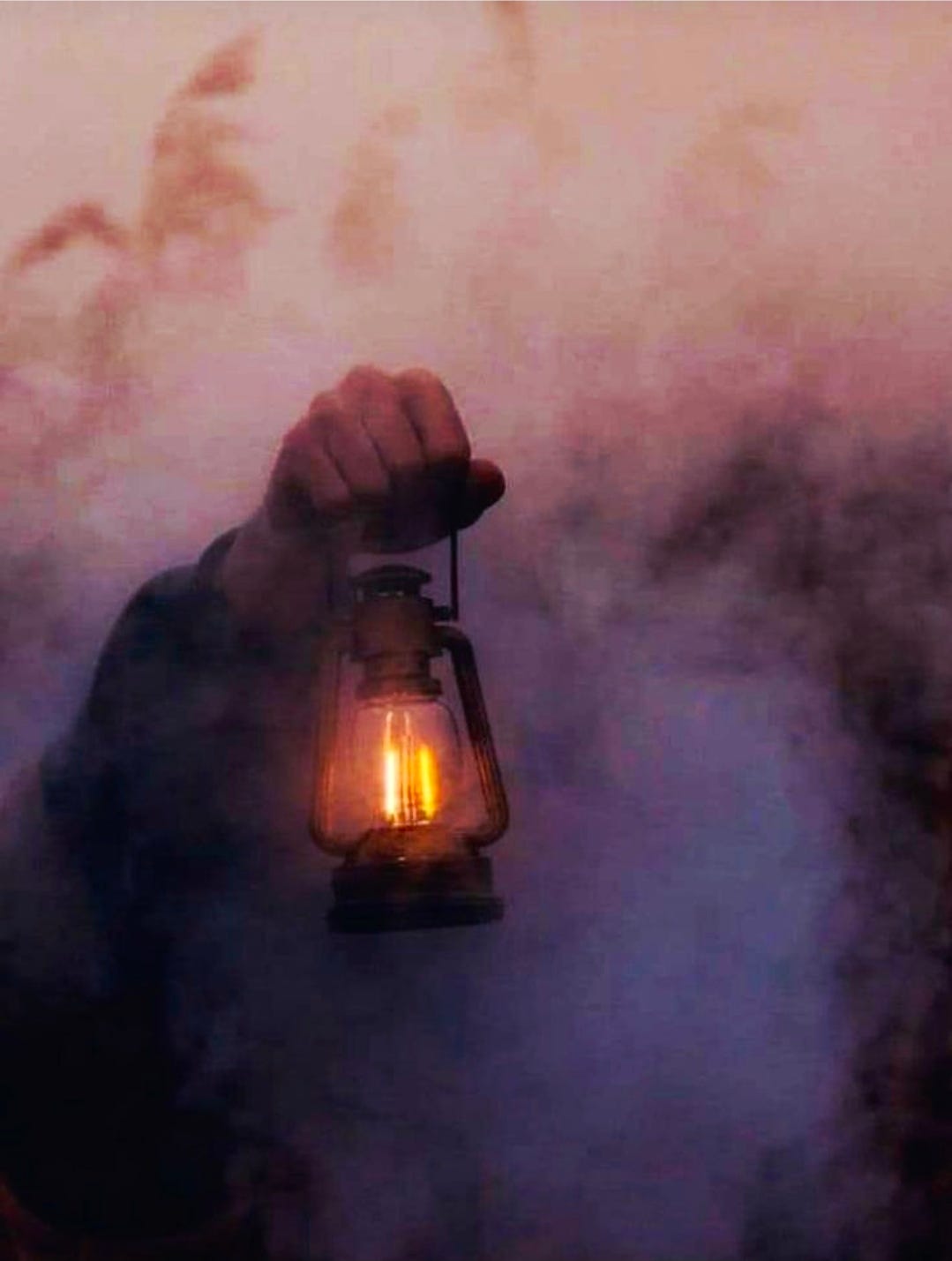
It is the people carrying lanterns.
The people who walk toward the places everyone else has stopped looking, who understand that another person's suffering is still their concern, and who refuse to measure human worth by popularity, power, citizenship, ability, income, religion, race, or whether a story happens to be trending that week.
They are rarely famous. They are rarely wealthy. Most will never be recognized for what they have done. There will be no documentaries about them, no monuments, and no history books dedicated to their names. Yet history has always depended on them. Every generation has had people willing to walk into the darkness carrying a small light and saying, "You are not forgotten."
That is what a lantern does. A spotlight demands attention. A lantern offers guidance. A spotlight draws people toward itself. A lantern helps people find one another. A spotlight shines brightest at the center. A lantern illuminates what is directly in front of it and keeps moving forward.
The people who inspire me are lantern people.
They are the people who understand that not every act of courage needs an audience, not every act of compassion needs recognition, and not every fight for justice will become a headline. They simply see someone standing in the dark and decide to carry a little light in their direction.
Most of them will never know the full impact of what they have done. They may never see the person they encouraged. They may never know whose fear they eased, whose dignity they protected, or whose life changed because somebody showed up when nobody else would. They carry the lantern anyway. That is why, despite everything, I still have hope.
Because for every person trying to control the flashlight, there are countless others quietly carrying lanterns.
And lanterns have a way of finding each other. One light becomes another. Then another. Then another. Until the darkness is not quite as dark as it was before.
Every generation is ultimately measured by what it chooses to ignore and what it refuses to abandon. When I look around today, I see plenty that frightens me. I see reasons to be angry. I see reasons to be afraid.
But I also see lanterns.
A Note From Me:
It is easy to become overwhelmed by everything happening around us. It is easy to get lost in the cruelty, the chaos, the fear, and the endless stream of headlines demanding our attention. What gives me hope are the people who keep showing up anyway. The people carrying their own light into places that have been forgotten.
I was inspired to write this article because I have been thinking about those people a lot lately. The people who keep showing up, even when nobody is watching, because they have decided that another person's suffering still matters.
I hope this piece encouraged you. If you appreciate writing like this, along with the deeper dives I publish on the stories shaping our country, please consider becoming a paid subscriber. Paid subscriptions help support the time this work takes and help me move closer to doing this work full-time at a moment when independent journalism matters more than ever.
— Judith
Immediately I thought of this verse… I smile as I remember my husband and me walking along the side of the road in the dark after a neighborhood gathering… I had brought a small lantern and with its light shining ahead of us about 3 feet, we managed to arrive safely home just fine. We smiled as we mentioned the verse.
Your essay is superb. Inspired and inspiring. Indeed the spotlight versus the lantern. This is beautiful and I’m grateful I came across it. Sharing the glow. You never know where these things will lead.
I’m a retired educator, but it crosses my mind to mention that, teaching kids ages 7–9, of course there are studies to follow but certainly no harm in embellishing and enhancing learning. I can imagine sharing this essay with them to see what they might have to say in response. Very rich experience, I am sure. Kids see the light!
Thank you again.
Psalm 119:105
King James Version
105 Thy word is a lamp unto my feet, and a light unto my path.
Your piece on flashlights and lanterns brings to mind the image of a cat chasing a red laser pointer—captivating but ultimately elusive. It’s a powerful metaphor for how conspiracy theories and disinformation operate, deliberately pulling people into a chase that exploits their focus and vulnerabilities.